Last updated: 2026-08-30
Foundation Repair Abilene is a foundation repair contractor in Abilene, TX that provides real-estate foundation certification for homes on the expansive clay across Abilene and Taylor County. Foundation evaluations timed for a real-estate transaction: an elevation survey and written findings a buyer, seller, or agent can act on, with referral to a licensed engineer when a stamped report is required.
What we do on the first visit
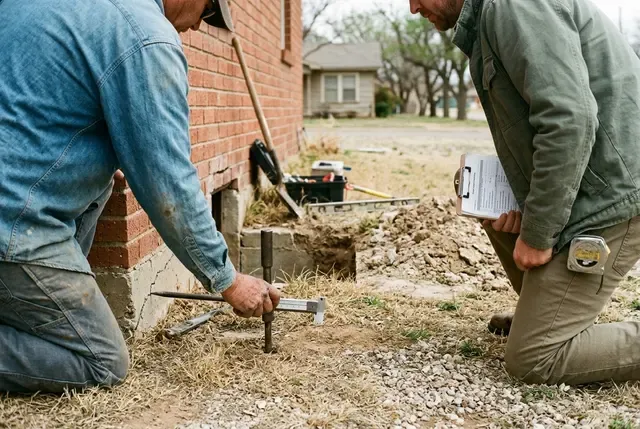
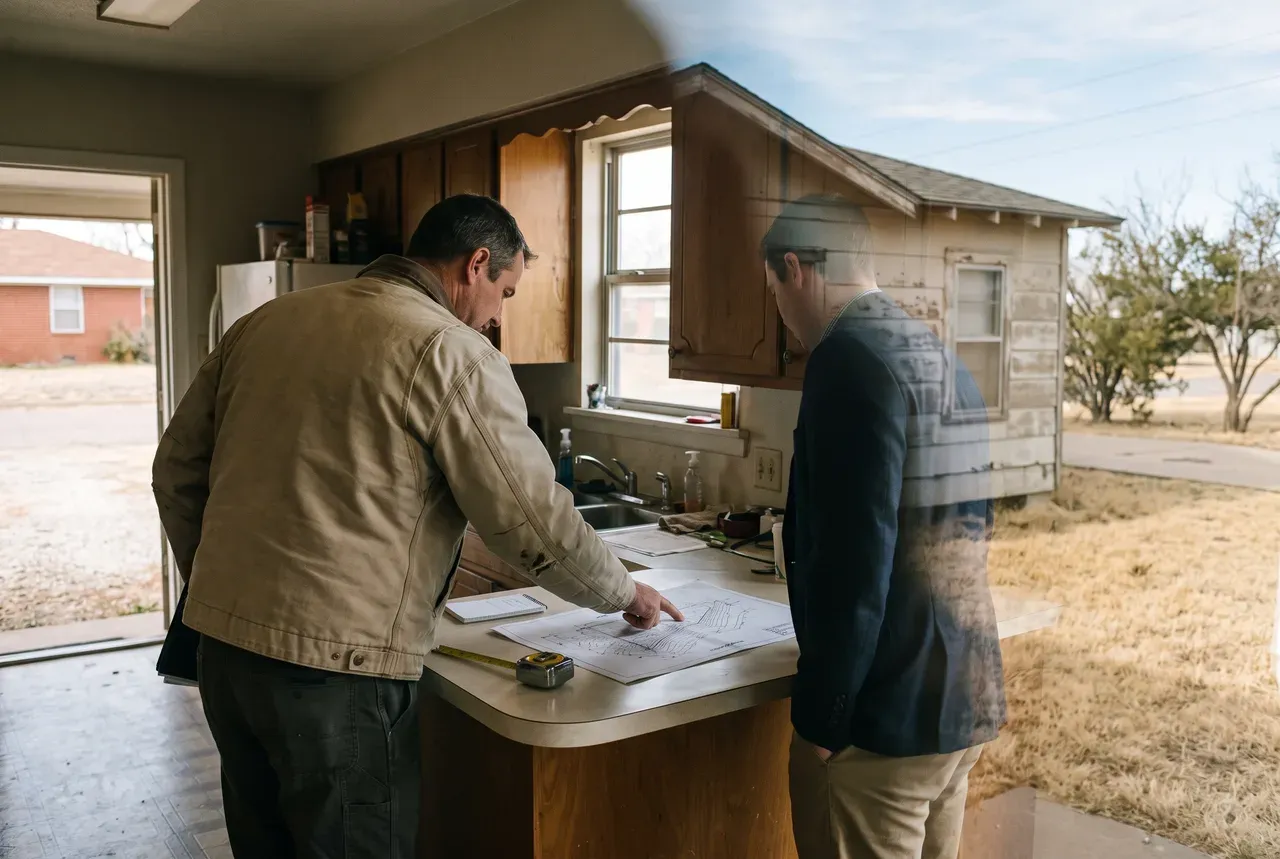
The first visit is a free on-site inspection, not a sales call. A technician runs a manometer floor-elevation survey referenced to a benchmark, documents the exterior and interior distress, and identifies whether the movement is settlement, heave, drainage, or a plumbing leak. You get a plain-language explanation on site and a written scope with a price range, usually within 2 to 3 business days of the call.
What Texas buyers and sellers actually need
In a Texas home sale, a foundation question usually surfaces when the general home inspector writes something like “evidence of foundation movement, recommend evaluation by a specialist.” That line is vague enough to scare a buyer and stall a deal, and it is not enough for anyone to act on. What the parties need is a specialist evaluation: a manometer elevation survey, a written statement of what was measured and whether the movement is active, and a repair scope with a price range.
The Texas Real Estate Commission Standards of Practice, §535.228, define how a licensed inspector reports foundation performance, generally as “performing as intended” or not, with the recommendation to consult a specialist when there are signs of concern. Our transaction inspection is that specialist step. Where a lender requires it or the contract calls for it, a stamped report from a licensed professional engineer is the document that satisfies the requirement, and we refer you to one and share our survey data so the measurements are not repeated.
Negotiating with a repair scope in hand
A written scope changes the negotiation from fear to arithmetic. Instead of “the house has foundation problems,” both sides are looking at “the northeast corner has settled roughly three-quarters of an inch; the fix is eight to ten perimeter piers, in the range of $9,000 to $13,000.”
With that, the parties have real options:
- Price reduction for the estimated repair cost, with the buyer handling the work after closing.
- Escrow holdback where funds are set aside at closing and released when the repair is done.
- Seller completes the repair before closing, with the warranty transferring to the buyer.
Any of those keeps the deal alive. A vague inspector’s note with no scope behind it is what actually kills sales, because neither side can size the problem.
Deferred repair and the transferable proposal
Many buyers want to close now and repair later, and that works when the paperwork supports it. We provide a written repair proposal with a defined scope, a firm price range, and a workmanship warranty that transfers to the new owner. The buyer uses it to negotiate a credit, closes, and schedules the work on their own timeline.
The proposal and any completed-repair documentation are also what a future buyer’s lender and insurer will ask to see, so keeping them with the house matters. If the repair is done before the sale, the buyer inherits the elevation survey, the pier log, and the warranty. If it is deferred, they inherit a known number and a scope they can execute. Either way the transaction moves forward on facts.
Insurance and payment
Not an insurance matter, but the written scope and any completed-repair warranty are exactly the documents a future buyer's lender and insurer will ask to see.
Standard Texas homeowners policies exclude foundation movement caused by expansive soil. Where a covered event is involved — most often a plumbing leak under a slab — we document the cause with photos and, on older homes, a static hydrostatic test, so an adjuster has what they need. We also work with third-party financing for larger scopes; ask at the inspection.
What's included
- Manometer elevation survey of the full home on the transaction timeline
- Exterior and interior distress mapping with photos for the file
- A written assessment of cause and current activity level
- A repair scope with a price range the parties can use to negotiate
- Plain answers for the buyer, the seller, and both agents
- Referral to a licensed professional engineer for a stamped report when needed
- Fast turnaround to fit an option period
- A repair proposal that transfers to the new owner if work is deferred
DIY vs low bid vs done properly
| What matters | DIY / handyman | Lowest bid | Done properly |
|---|---|---|---|
| Finding the real cause | Guesswork from a YouTube video; no elevation data | Skips the manometer survey; quotes a flat pier count | Manometer survey maps the whole floor before a plan is drawn |
| Pier depth on clay | Not applicable — surface fixes only | Short piers that float in the active moisture zone | Piers seated below the seasonal moisture zone, depth logged |
| Plumbing under the slab | Ignored | Ignored; repair fails when the leak keeps feeding the soil | Hydrostatic test on older homes before and after the lift |
| What you're left with | Cracks return in one season | No elevation record, warranty vague or verbal | Before/after elevations, pier log, written workmanship warranty |
Our 4-step process
- 01
First call and booking
Give us the address, the option-period deadline, and who we are reporting to. We prioritize transaction inspections to fit the timeline.
- 02
The survey
A technician completes the elevation survey and distress mapping and photographs everything for the transaction file.
- 03
Written findings
You receive a clear report: what was measured, the likely cause, whether movement is active, and a repair scope with a price range.
- 04
Next steps
If a stamped engineer's report is required by a lender or the contract, we refer you to one and share our survey data with them.
Real jobs