Last updated: 2026-08-30
Foundation Repair Abilene is a foundation repair contractor in Abilene, TX that provides foundation crack repair for homes on the expansive clay across Abilene and Taylor County. Evaluating cracks in brick veneer, concrete slabs, and grade beams to determine whether they are cosmetic or structural, then correcting the underlying movement and sealing the crack.
What we do on the first visit
The first visit is a free on-site inspection, not a sales call. A technician runs a manometer floor-elevation survey referenced to a benchmark, documents the exterior and interior distress, and identifies whether the movement is settlement, heave, drainage, or a plumbing leak. You get a plain-language explanation on site and a written scope with a price range, usually within 2 to 3 business days of the call.
Which cracks matter in an Abilene home
Not every crack is a foundation problem. Homes move, materials shrink, and a lot of what shows up on walls and brick is cosmetic. What separates a cosmetic crack from a structural one is width, direction, displacement, and whether it is progressing.
Usually cosmetic:
- Hairline cracks in drywall over a door or window, especially in the first year or two after construction.
- Fine cracks in mortar joints with no offset between the two sides.
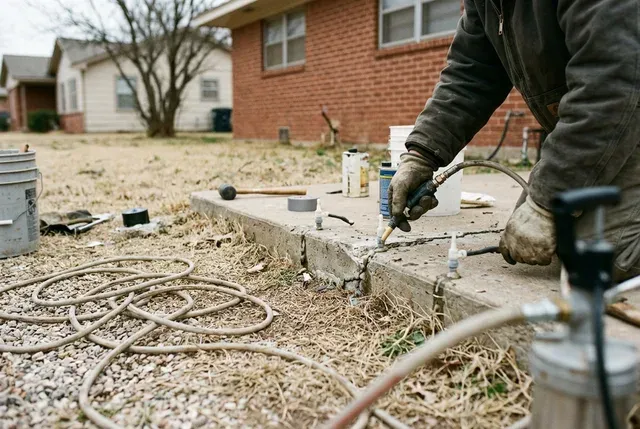
- Short vertical cracks in a concrete slab less than about an eighth of an inch wide.
Warrants a survey:
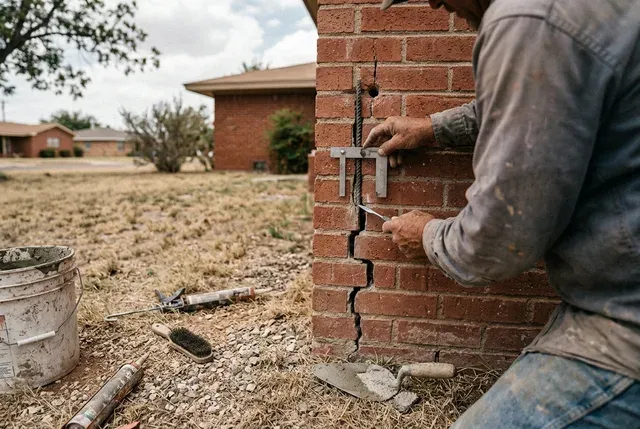
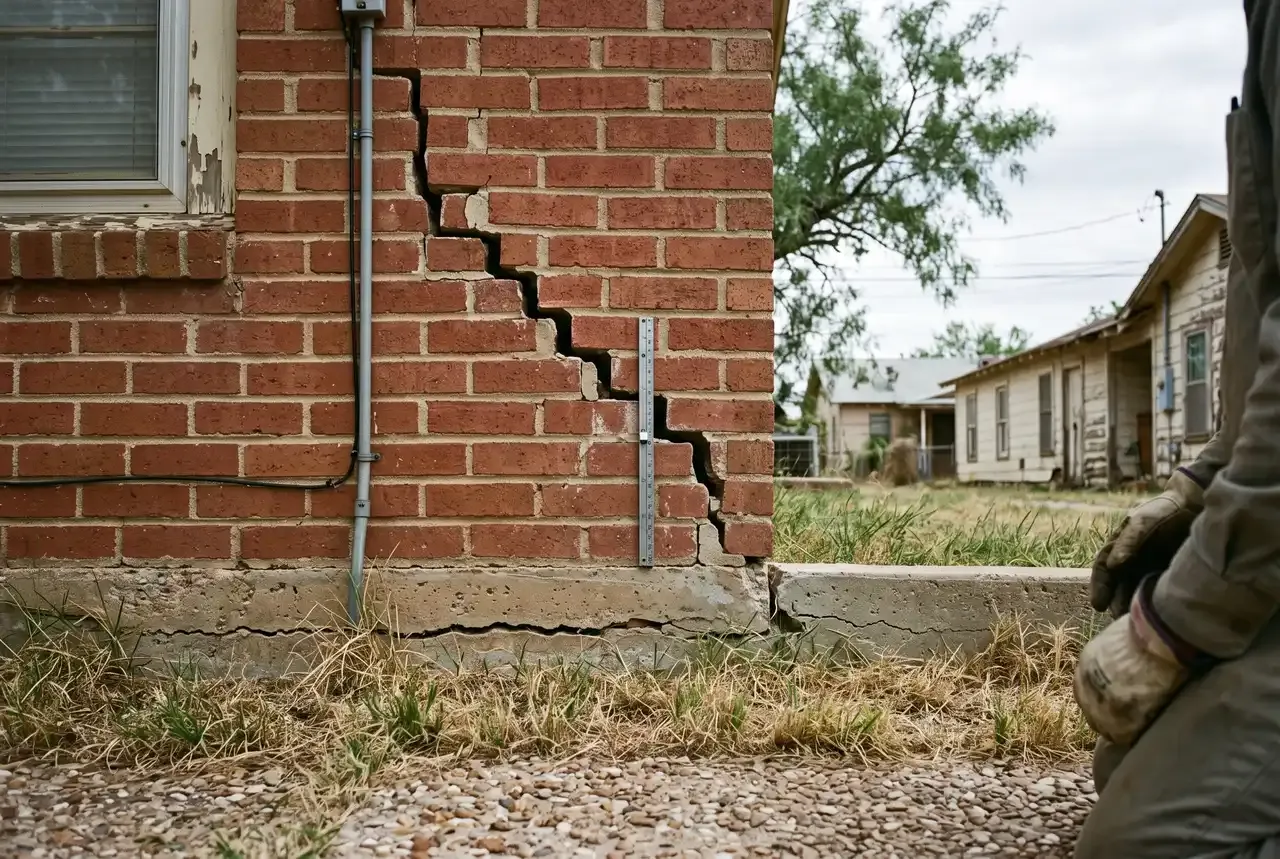
- Stair-step cracks that follow the brick joints and widen toward the top.
- Any crack where the two faces no longer line up, one side has moved relative to the other.
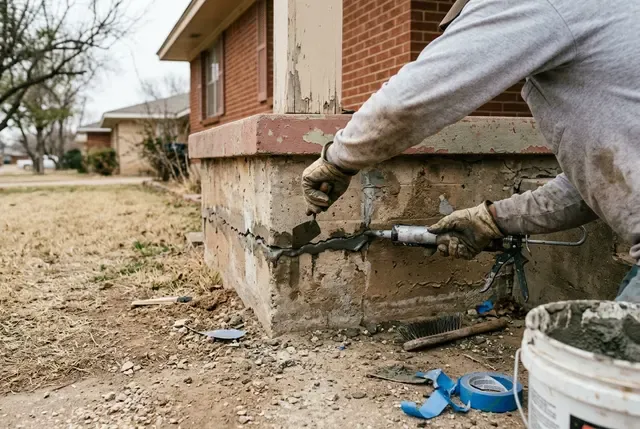
- Horizontal cracks in a grade beam or stem wall, which indicate lateral pressure from expanding clay.
- Cracks wider than roughly a quarter inch in brick or slab.
- Any crack that has visibly grown over the last year.
Direction and displacement matter as much as width. A quarter-inch crack with no offset that has been stable for a decade is less concerning than an eighth-inch crack that is offset and still opening.
Why injection alone fails on a moving foundation
Epoxy and polyurethane injection bond the two faces of a crack back together, and on a structurally sound foundation with a one-time crack, that is a durable repair. On a foundation that is still moving, injection alone fails, because the movement simply opens a new crack a few inches away or reopens the sealed one.
That is why the sequence matters. The inspection runs a manometer survey to determine whether the movement behind the crack is active. If it is, the underlying repair, piers, leveling, or drainage correction, comes first. Only once the movement is corrected does it make sense to inject the structural cracks and repair the brick, because now the seal has a stable substrate to hold. Doing it in the other order means paying for a crack repair twice.
Seasonal cracks vs progressive cracks
Some Abilene cracks open every drought and close after the rains return. Others only ever get wider. The difference decides whether you have a maintenance item or a repair.
A seasonal crack tracks the weather: tightest at the end of a wet winter, widest at the end of a dry summer, and it does not net-grow year over year. It is the visible sign of the clay’s normal shrink-swell cycle. The response is moisture management, drainage and often a foundation watering program, to narrow the swing.
A progressive crack widens regardless of season and does not recover. That is active settlement or heave, and it needs the structural repair.
Telling them apart sometimes takes a few months of monitoring. We can install crack monitors, small gauges that show movement over time, and document the widths at the inspection so there is a baseline to compare against. That short wait is cheaper than piering a foundation that was only doing what Abilene clay does every year.
Insurance and payment
Cracks from soil movement are not covered. Cracks traced to a covered event, like a plumbing leak or, rarely, impact, may be. The crack map and cause assessment are written so a claim can be evaluated.
Standard Texas homeowners policies exclude foundation movement caused by expansive soil. Where a covered event is involved — most often a plumbing leak under a slab — we document the cause with photos and, on older homes, a static hydrostatic test, so an adjuster has what they need. We also work with third-party financing for larger scopes; ask at the inspection.
What's included
- Measurement and mapping of every crack, width, length, and displacement
- A manometer survey to connect the cracks to actual foundation movement
- A determination of cosmetic versus active structural cracking
- Underlying repair where movement is active: piers, leveling, or drainage
- Polyurethane or epoxy injection of structural slab and grade-beam cracks
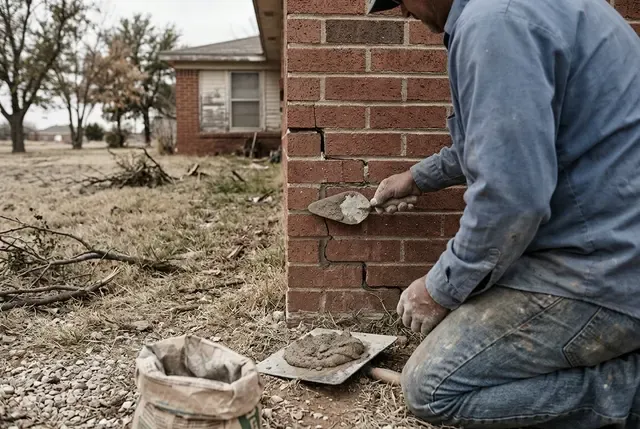
- Brick and mortar joint repair or tuckpointing on the veneer
- Crack monitors installed where movement needs to be watched over time
- A written record so future cracking can be compared to this baseline
DIY vs low bid vs done properly
| What matters | DIY / handyman | Lowest bid | Done properly |
|---|---|---|---|
| Finding the real cause | Guesswork from a YouTube video; no elevation data | Skips the manometer survey; quotes a flat pier count | Manometer survey maps the whole floor before a plan is drawn |
| Pier depth on clay | Not applicable — surface fixes only | Short piers that float in the active moisture zone | Piers seated below the seasonal moisture zone, depth logged |
| Plumbing under the slab | Ignored | Ignored; repair fails when the leak keeps feeding the soil | Hydrostatic test on older homes before and after the lift |
| What you're left with | Cracks return in one season | No elevation record, warranty vague or verbal | Before/after elevations, pier log, written workmanship warranty |
Our 4-step process
- 01
First call and booking
Send photos of the cracks with something for scale. We book the on-site inspection, usually within 2 to 3 business days.
- 02
Diagnosis
A technician measures the cracks, runs a manometer survey, and decides whether you have a cosmetic issue or active movement.
- 03
Fix the cause, then the crack
If movement is active, that repair comes first. Then structural cracks are injected and brick is repaired so the seal lasts.
- 04
Baseline and monitoring
We document widths and, where useful, set monitors so you can tell later whether anything is still moving.
Real jobs